
As part of our Rewriting the Book Manufacturing Playbook series, we've explored the forces reshaping today's publishing and book production landscape. Shorter print runs, rising production costs and the growing role of digital inkjet are changing the way books are produced around the world.
To explore these trends through the lens of one of the industry's leading technology providers, we spoke with Yale Goldis, Director of Strategy, Commercial Products and Solutions at HP PageWide Industrial. In this interview, he shares his perspective on how the publishing landscape is evolving and what these changes mean for the future of book manufacturing.

Over the past decade, how has book manufacturing changed?
Goldis: “Book manufacturing has become more dynamic and less predictable over the past decade. Manufacturers are managing higher energy and paper costs, geopolitical uncertainty, tariffs and logistics disruptions, while publishers are asking for more flexibility across a broader title base. At the same time, reader discovery has changed, driving renewed demand for backlist titles, faster reprints and more premium editions with embellishments, special finishes and edge printing.
One positive shift is that the industry has reduced the number of books printed and later repulped. Better planning, tighter inventory management and the growth of digital book production have helped publishers and manufacturers match supply more closely to demand, reducing waste while keeping titles available.”
What are the biggest challenges for book manufacturers today?
“Book manufacturers face pressure from every direction: shorter runs, tighter turnaround times, higher input costs, labor constraints, supply chain volatility and growing sustainability expectations. Publishers still expect high service levels, but they also want lower inventory, faster replenishment and more flexibility without paying higher prices. That puts pressure on manufacturers to reduce cost, improve throughput and build production models that can respond profitably to more fragmented demand.”
How are publishers changing the way they buy books?
“Publishers still order long runs for major bestsellers, but more of their demand is shifting toward smaller, more frequent orders. They are reducing first-run quantities, replenishing faster, carrying less inventory and responding to demand signals from backlist titles, social media-driven trends and premium editions with embellishments or special finishes. This requires book manufacturers to support faster turnaround, shorter runs and more flexible production economics without sacrificing service levels.”
How are book manufacturers responding to these market changes?
“Book manufacturers are responding by adding digital production capacity, expanding regional fulfillment options and building new service models around inventory reduction. Digital book production now supports print-on-demand, short-run, replenishment and high-volume work, giving manufacturers more flexibility across a wider range of order profiles. Many are also using direct operations or regional partnerships to produce books closer to demand, reducing shipping time and improving availability. On top of the press platform, they are developing zero- and micro-inventory models that help publishers keep titles available while reducing working capital, storage costs and waste.”
What changes are you seeing in the types of production equipment and setup that book manufacturers are investing in today?
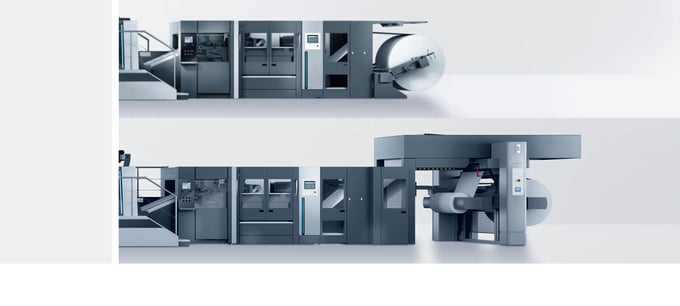
“Book manufacturers are investing in two types of digital production lines to match changing publisher demand. First, they need highly flexible systems that can efficiently produce short runs and books on demand. Second, they need high-volume digital lines that can handle longer-run work economically. In both cases, manufacturers want equipment that integrates with their production systems and uses automation and intelligence to improve efficiency, reduce waste, and support continuous production.”
Historically, digital book printing has primarily been associated with print-on-demand. Is that changing?
“Digital book production has moved well beyond its early association with print-on-demand and very short runs. Today, high-volume inkjet lines are being used for runs in the thousands of copies, making digital a practical option for many first-run titles and replenishment orders. As publishers reduce initial print quantities and rely more on frequent reprints, digital production gives manufacturers the flexibility to match demand without carrying excess inventory.”
Do you see offset and high-volume inkjet as competing technologies, or as complementary production methods?
“Inkjet and offset are complementary production methods. Offset remains well suited to very long, predictable runs, while high-volume inkjet gives book manufacturers the flexibility to produce shorter runs, frequent reprints, and fast-turn work more economically. As the crossover point between the two technologies continues to shift, manufacturers with both capabilities can choose the most efficient production path for each job and serve publisher demand from one copy to mass-market volumes.”
Looking ahead five to ten years, how do you see industrial book manufacturing evolving?
“Over the next five to ten years, industrial book manufacturing will continue moving toward a more flexible, data-driven production model. Manufacturers will need short-run and book-on-demand capabilities, high-volume digital lines and offset capacity to meet increasingly varied demand. The biggest gains will come from connecting those systems through automation, workflow integration and intelligence, so manufacturers can choose the right production path for each job, reduce waste and keep books available with less inventory.”
That raises a different question. If offset remains the best choice for the longest, most predictable runs, but publishers continue reducing first-run quantities and ordering more frequent replenishments, what happens when a job no longer fits the economics of web offset?
That is exactly the question the next article will explore.